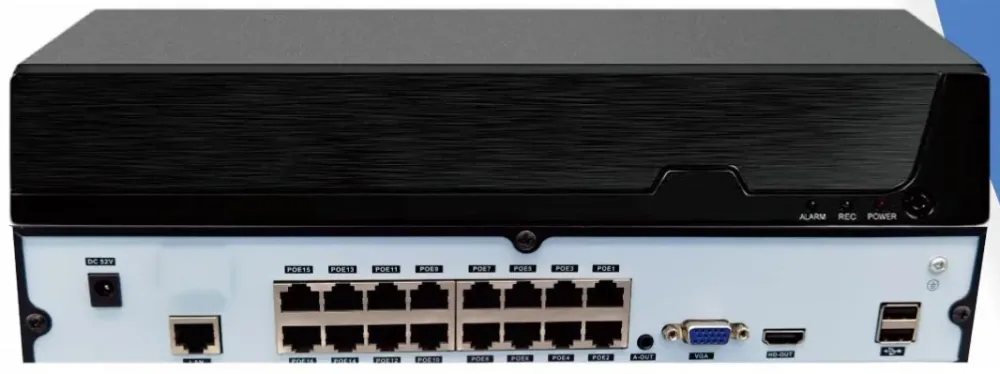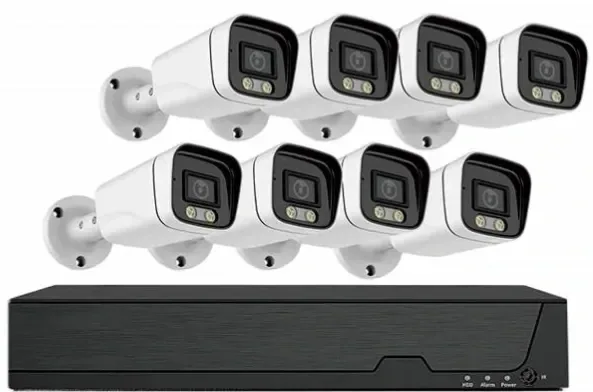
Two quotes land on the same desk for the same hotel project. One total is far above the other. The instinct is that one of them is wrong, or that one supplier is gouging, or that the cheap one is selling something that will fail. In commercial CCTV procurement, none of those is usually true. Both quotes can be honest, both can be buildable, and both can be for genuinely different jobs.
A gap of that size does not sit in one place. In our experience of dissecting these comparisons, it sits in four blocks: brand premium, the channel between the factory and your site, system lock-in, and the wording used to describe the scope of delivery. Only the first of those is about the product. The other three are about the transaction, which is why they are the three worth attacking.
One thing before the detail: the two configurations, and the date of our own quote — 22 August 2026 on EXW terms — are in the line-by-line comparison we share on request. The value of this article is the method rather than a reconstruction, so what follows is how to split a gap of that size yourself, using the two totals as they stand. Note that the two scopes were not identical, which is itself the first of the four blocks.
What are the four blocks behind one price gap?
Every large gap we have been asked to explain has decomposed into the same four blocks. What follows is a CCTV system cost comparison method rather than a reconstruction, and the table is written so you can put your own two quotes against it.
| Block | What it looks like on a quote | How to test it |
|---|---|---|
| 1. Brand premium | A familiar name on every line, with no specification row that could not be met by another supplier at a different price | Ask which line item would have to change if the brand changed, and which rows are brand-specific rather than performance-specific |
| 2. Channel markup | Different prices for identical hardware depending on how many intermediaries sit between the factory and your site | Ask for the same bill of materials from two routes and compare line by line; identical rows with different prices are channel cost, not product cost |
| 3. System lock-in | Mandatory controllers, per-camera licences, specified hard drives, and accessories that are only available from the same source | List every item that cannot be substituted, then price the same system with substitutes removed from the requirement |
| 4. Scope-of-delivery wording | Wired or wireless, installation included or excluded, warranty length, training, and who supplies the drives and the cable | Rewrite both scopes as a single list of deliverable rows before comparing a single number |
How much of the gap is the brand premium?
A brand premium is not a swindle, and it is often the largest single component of a commercial CCTV system price difference. It pays for a marketing organisation, a global support structure, a training and certification programme, and the resale value of a name that a consultant can put in a tender without being asked why. If your project needs those things — a bank with a group standard, a tender that names approved brands, an insurance requirement written around a familiar product — the premium buys something real and you should pay it knowingly.
What the premium does not buy is a different camera. A 5 MP sensor at 2880 × 1620, an F1.0 aperture, colour held to 0.1 Lux, H.265+ compression and 25 fps real-time recording are engineering outcomes, and they are checkable numbers. When two quotes differ that widely on the camera line, the useful question is not which brand is better; it is which specification row is different. Often none is, and the difference is entirely in the three blocks below.
How much of the gap is the channel between factory and site?
The second block is the number of hands the hardware passes through. Every layer between the factory and your site needs margin, and each one adds a percentage rather than a fixed amount, so the effect compounds. A single extra layer can move a hardware line by a fifth without anyone behaving badly.
The test is straightforward and does not require anyone to disclose their margin: ask two sources to price exactly the same bill of materials, with the same model list, the same quantities, the same warranty and the same delivery terms. Where the rows match and the prices differ, the difference is channel cost. Where the rows differ, you are comparing two different systems and the price gap tells you nothing yet.
How much of the gap is system lock-in?
This is the block that produces the largest gaps, and it is the one that is hardest to see because it is spread across items that look secondary. Lock-in shows up in four shapes:
- Mandatory controllers. A recording or decoding platform that only accepts accessories, keyboards or expansion cards from the same source, so the second purchase is not a competitive purchase.
- Per-device licensing. A licence line for every camera, every channel or every workstation, which grows with the building rather than with the project.
- Specified storage. Hard drives that must come from the same supplier, at a price set by that supplier, in quantities set by the recorder.
- Required accessories. Power supplies, brackets, warning lights and audio units that are only certified to work with one range.
None of these is inherently wrong — a tightly integrated platform can be the right answer for a large site with a single owner. But the cost of lock-in is paid over the life of the building, not at handover, and a comparison that prices only year one understates it. When we price a system we list what is interchangeable: our recorders take drives on the open market, the channels are built into the recorder’s published capacity rather than sold per camera, and the cameras and recorders speak ONVIF, RTSP and GB28181 so a third-party front end remains an option.
How much of the gap hides in the scope of delivery?
The fourth block is not technical at all. It is the meaning of “supply and install”, and in a gap of this size it is often the largest single item. Five questions settle it:
- Wired or wireless? A wireless design removes cable and labour from the scope and moves the cost to reliability and link maintenance. The two are not comparable line for line.
- Is installation inside the price? Cable, conduit, containment, lift access, out-of-hours working and making good after drilling are all real costs, and they appear in one quote and not the other.
- How many years of warranty, and what does it cover? Two years parts-only and five years parts and labour are not the same offer, and the difference belongs on the comparison rather than in a footnote.
- Who supplies the drives, the cable and the switches? These are frequently excluded from a camera quotation and then purchased separately, which makes the headline number look smaller than the project.
- What is the retention period? The number of days the site must keep, multiplied across the channels, sets the storage cost and can move a quote by a significant fraction on its own.
Why does the storage line hide scope differences?
Storage is the single line where a scope difference can hide inside what looks like a technical one. The arithmetic is not proprietary, and it is worth doing yourself before you compare quotes:
GB per day per channel × channels × retention days ÷ 1024 = terabytes required
A 5 MP channel at H.265+ typically records somewhere in the region of 8 to 15 GB per day depending on scene, movement and frame rate. Twenty-four channels at 10 GB per day for 30 days is 7,200 GB, or about 7 TB of usable requirement — which fits on a two-bay recorder only if you choose the bay capacity properly. Our recorders take up to 14 TB per bay at 10 and 16 channels and up to 18 TB per bay at 32, 49 and 64 channels, but buy headroom for the retention you will be asked for in year three, not year one.
What will we — and won’t we — do with a comparison?
Send us the bill of materials you were quoted and we will price the same list row by row. We will mark where the scope differs, where a line is brand-specific rather than performance-specific, and where your existing equipment can stay. We will tell you when the existing recorder should not be replaced. We will not call another manufacturer’s product defective, and we will not publish a claim about anyone else’s hardware that we could not defend in a meeting. If the appendix of our comparison is missing anything you need — the configuration, the date, the currency, the quantities, the warranty — ask, and it will be added before you make a decision.