Full colour night vision for building CCTV
Full Colour Night Vision Security Camera — See in Colour With No Light At All
A full colour night vision CCTV camera keeps recording colour after dark: no floodlight switched on for the camera, no white LED array fired at the scene, and the file that lands on the recorder is still in colour. Three numbers on our datasheet carry that claim — a 1/2.7-inch low-light CMOS sensor, an F1.0 aperture and a colour minimum illumination of 0.1 Lux at F1.0. This page explains what those numbers mean on a real site, where the approach fits, and where it stops.
- 5 MP at 2880 × 1620 on a 1/2.7-inch low-light CMOS sensor
- F1.0 aperture — colour down to 0.1 Lux, no external lighting
- H.265+ at 500–8000 kbps on the main stream, 25 fps real time
- ONVIF, RTSP and GB28181 for third-party recording
What full colour night vision actually means
In three sentences, without the marketing: first, the camera produces colour video at night with no external lighting switched on for it; second, it does that without firing its own white LED array at the scene, so nothing about the installation announces itself; third, what makes it possible is an F1.0 aperture, a 1/2.7-inch low-light sensor and an IR-cut filter that stays in the light path instead of being pulled out.
That last point is the technical heart of it. Infrared night vision removes the IR-cut filter so that infrared light reaches the sensor, and the sensor then records infrared instead of red, green and blue — which is why infrared footage is always black and white. Keep the filter in place and the sensor keeps recording colour; the cost is that you need more light, and that is what the F1.0 aperture and the sensor format are there to supply.
So the numbers to compare are three. Sensor format sets how much light-gathering area sits behind each pixel: ours is 1/2.7 inch. Aperture sets how much of the available light reaches that sensor: ours is F1.0. Minimum illumination is where the manufacturer agrees colour stops being usable: ours is 0.1 Lux in colour mode at F1.0. Any camera that will not put those three numbers on paper in colour mode is going to hand you monochrome at two in the morning.
There is a limit, and we would rather state it here than let you find it on site. In absolute zero light — a sealed room, no windows, no light spill from anywhere — nothing reaches the sensor, and the camera has to add light of its own. Every sensor has that boundary. What differs between products is where the boundary sits, and how much of the night you get in colour before you reach it.
Compared with the three approaches it replaces
| Approach | What you get after dark | What it costs you |
|---|---|---|
| Infrared illuminator | A usable monochrome image, even in total darkness | Clothing and vehicle colour are never captured; the illuminator shows anyone watching where the camera is |
| Black and white low-light | A usable monochrome image with no illuminator running | Colour is discarded at the sensor, so it cannot be recovered in review |
| Starlight tier colour | Colour while residual light lasts — street lighting, dusk-to-dawn lamps, light spill | Falls back to infrared, and therefore to monochrome, once ambient light drops below the tier threshold |
| Full colour at F1.0 (this series) | Colour down to 0.1 Lux at F1.0 with no external lighting and no camera LEDs | Colour carries more bitrate than monochrome at the same resolution, and below 0.1 Lux the built-in illuminator has to contribute light |
Specification rows for the FC5 series, as printed on the datasheet: colour 0.1 Lux at F1.0; black and white 0 Lux with the illuminator on. Both rows are on the sheet, and the configuration your quote specifies is the one that applies.
Where colour at night actually changes an outcome
Colour is not a picture-quality preference. It is an extra dimension in the file, and it decides what a recording can be used to prove. These are the positions where it earns its place:
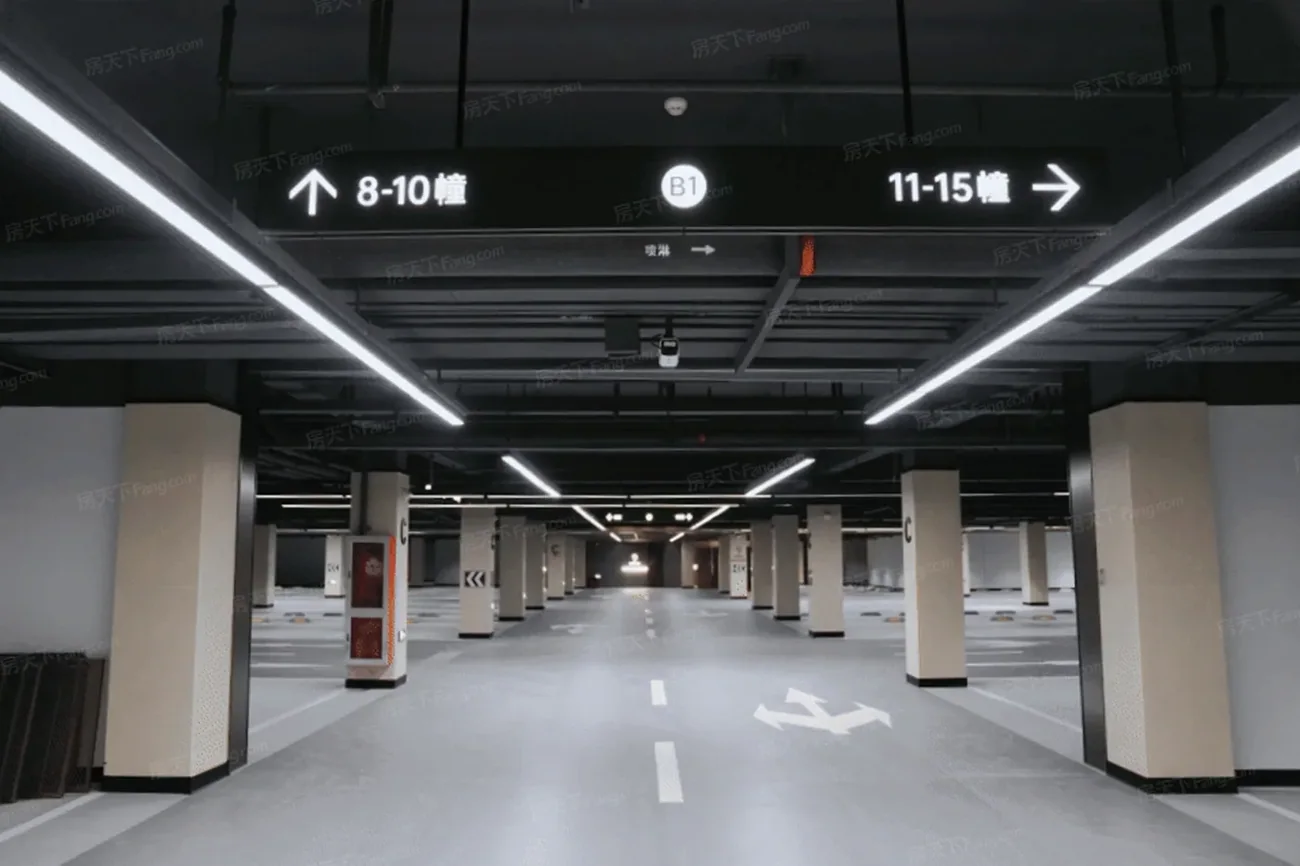
- Car parks and vehicle ramps with low-level lighting — vehicle colour and plate backdrop stay on the record at the hour when most incidents happen and the lighting is at its lowest setting.
- Warehouse perimeters and loading yards — a person crossing an unlit yard with a torch switched off is a shape on a monochrome file and a jacket colour on a colour file.
- Street-facing entrances and shopfronts — light spill from the street is often enough on its own, so the camera holds colour all night without you paying for a floodlight to run.
- Service corridors, stairwells and plant rooms where a light is fitted but deliberately switched off after hours.
- Anywhere a guard has to describe a person or a vehicle to police in real time. A colour description is the one that gets passed down the radio.
The pattern is consistent: full colour night vision pays off where people and vehicles are close enough to be identified, and where the site already has some light — or can be given a little — after dark.
Where full colour night vision is the wrong choice
We would rather lose a line item than sell you the wrong camera. These are the cases where we will say so:
- Long-range identification on a dark boundary line. A 5 MP sensor at F1.0 gives you colour close in; for a face or a plate at distance you want a PTZ with optical zoom and its own illumination, and you should expect that view to be monochrome after dark.
- Sites with no ambient light at all and no tolerance for any visible light. The fill light is visible light, and on a site where the camera must not be noticed, that matters more than colour.
- Regulated industrial areas. This is a building CCTV range with no hazardous-area certification, and the 38 × 38 mm board modules carry no ingress-protection rating of their own, so an enclosure has to be specified separately. If your site needs those documents, this is not the range for you.
- Storage- or bandwidth-limited sites where a monochrome sub-stream genuinely answers the question. Colour at night uses more bitrate than monochrome at the same resolution, so budget the recording before you commit.
- OEM projects that need the phone app re-branded. Logo placement covers the outer carton, the device case, the channel display page and the boot screen; the application itself is supplied by the platform and cannot be re-branded.
Where the camera sits in the rest of the system
A night-vision camera is still a PoE camera, and it lives in the same chain as everything else: camera, PoE switch, CAT6 run, recorder, then the wall or the client. Get any link wrong and the night image is what suffers first, because that is when the stream is working hardest.
On the camera side, one RJ45 handles 10/100 Mbps and power over the same cable; if you are not running PoE, the module also takes DC 12 V 2 A, with protection against surge, static and reverse polarity. The network port is specified for 6 KV common-mode and 1.5 KV differential-mode surge, and the power input for 1.5 KV, which matters on sites where the lighting circuit and the network cabinet share a supply. Operating temperature is −20 ℃ to +55 ℃, so a plant room or an unconditioned riser is inside the range.
On the power side, our PoE switches are specified at 120 W for the 8-port, 250 W for the 16-port and 320 W for the 24-port model, and the PS series can run its ports in 250 m extend mode where a camera sits beyond the usual 100 m cable limit. Budget the watts before you count the ports.
On the recording side, the recorder decides how much of the night you keep. One 5 MP channel at H.265+ uses roughly 8–15 GB per day depending on how much motion crosses the frame, so 16 channels for 30 days lands around 4–7 TB — comfortably inside a 14 TB drive in a single-bay recorder, and worth checking against an 18 TB bay if you want 60 or 90 days.
All three parts are quoted on one bill of materials, which is the only way to see whether a quote is really cheaper or just shorter: see the PoE switch range and the NVR range for the other two links in the chain.
How to verify the claim before you specify it
Sample footage is available on request. We will send clips rather than a marketing still, because a still proves nothing about how a sensor behaves when a person walks through the frame. Tell us the site type — car park, warehouse yard, street-facing entrance, unlit corridor — and the lighting it has, and we will match the clips as closely as the library allows.
Then ask any supplier three questions in writing. What is the minimum illumination in colour mode? What is the aperture? What is the sensor format? Ours are 0.1 Lux, F1.0 and 1/2.7 inch. If a quote cannot answer those three in colour mode, the night image it will produce is an unknown.
Finally, run the arithmetic on your own site rather than on ours: what fixed lighting exists, what time it switches off, and what happens during a power cut. A camera with a fill light, a PoE budget and a storage plan is a design. A promise is not.
To request sample footage, use the quote form and tell us the site type and the hours you need on record. We answer within one business day.
Full colour against the other three night-vision approaches
Full colour vs infrared
Infrared buys you an image in total darkness, and it does that well. The price is that the sensor records infrared instead of colour, so the file is monochrome from the moment it is written, and the illuminator makes the camera position obvious to anyone in the yard.
- Use when
- Long boundary lines, unlit service yards and sites where you only ever need to know that something moved, and roughly when.
- Not when
- Anywhere the recording may have to identify a person or a vehicle: colour is a dimension of the evidence, and monochrome files do not carry it.
Full colour vs black and white low-light
A black-and-white low-light camera is a legitimate engineering answer — it is sensitive, it needs no illuminator, and it costs less bitrate. It simply decides, at the sensor, that colour is not worth keeping, and that decision cannot be undone in review.
- Use when
- Sites that need presence detection only, and long perimeter runs where an image at distance is the whole objective.
- Not when
- Sites where the footage may go to police, an insurer or a court and a person, a vehicle or an object has to be described rather than merely counted.
Full colour vs starlight tier colour
Starlight describes how much residual light a sensor can work with. It is a real capability and a fair one, but it is a threshold, not a guarantee: below the threshold the camera falls back to infrared and the picture falls back to monochrome. Full colour is the same idea specified further down the light scale.
- Use when
- Sites with street lighting, dusk-to-dawn lamps or reliable light spill, where a starlight sensor is comfortable all night.
- Not when
- Sites where the lighting is switched off entirely, or where the fixture is decorative and the site owner turns it off to save power.
Frequently asked questions
What does full colour night vision mean on a security camera?
It means the camera keeps producing colour video after dark instead of switching to monochrome. In practice you get a colour recording with no floodlight switched on for the camera and no white LED array fired at the scene. Three numbers on our datasheet carry that claim: a 1/2.7-inch low-light CMOS sensor, an F1.0 aperture, and a colour minimum illumination of 0.1 Lux at F1.0. The comparison that matters is not our camera against a brochure — it is what your current camera does at two in the morning, when the site lighting is at its lowest setting and the incident you will actually need on file happens.
Do I need external lighting for it to work at night?
Not down to 0.1 Lux, which is the level the series is specified at for colour. In a lit car park, a street-facing entrance or a corridor with a night light, the camera simply never leaves colour mode. Below 0.1 Lux the built-in illuminator has to add light, and that is true of every camera on the market — no sensor records light that never reaches it. So the honest way to specify this is to check three things about your site: what fixed lighting exists, what time it switches off, and what happens during a power cut. Send us those three answers and we will tell you whether the camera holds colour all night or needs the illuminator.
How is full colour night vision different from infrared?
Infrared works by removing the IR-cut filter and lighting the scene with light the eye cannot see. The sensor then records that infrared instead of red, green and blue, so the file is monochrome — the colour was never captured and cannot be restored later. Full colour night vision keeps the IR-cut filter in the light path and keeps the colour channels recording. The second difference is concealment: an infrared illuminator gives the camera away at night with a visible glow, while a camera holding colour on ambient light does not announce itself. We compare the two approaches in detail on the colour versus infrared page.
What happens in complete darkness with no light at all?
The camera has a built-in illuminator, and it will use it. What we will not do is pretend otherwise: in a sealed room with no windows and no light spill, the sensor receives nothing, and no specification changes that. The difference between cameras is where that boundary sits. On this series the colour specification runs to 0.1 Lux at F1.0, far below the point where most cameras have already fallen back to monochrome. If your site has genuinely unlit areas and you need them on record, tell us. We will size the illuminator, the PoE budget and the enclosure for that position together, and we will tell you what to expect on the file.
Does colour at night cost more storage than black and white?
Yes, and you should budget for it. A colour night recording carries chroma information that a monochrome stream does not, so at the same resolution and frame rate it uses more bitrate. Our cameras run 500 to 8000 kbps on the main stream with H.265+ compression, and as a working rule one 5 MP channel uses roughly 8 to 15 GB per day depending on how much motion crosses the frame. Sixteen channels for thirty days therefore lands around 4 to 7 TB. One 14 TB surveillance drive in a single-bay recorder covers that comfortably; if you want sixty or ninety days, size the recorder bays before you order, not after.
Which camera forms are available with the full colour sensor?
Three. The FC5B is a bullet and the FC5D is a dome; both are 38 × 38 mm board-level modules at 5 MP, 2880 × 1620, and both need an enclosure and bracket specified for the mounting position, because the board module itself carries no ingress-protection rating of its own. The FC5P-PTZ is a finished speed dome for wide-area and long-range coverage. All three share the same sensor, aperture and compression platform, so a mixed system — bullets on the perimeter, domes inside, a PTZ over the yard — is one configuration and one client rather than three. Where the camera sits within reach, specify an anti-vandal housing rather than a standard one.
Will it work with a recorder or platform I already own?
The camera speaks ONVIF, RTSP and GB28181 and streams H.265+ / H.265 / H.264, so it will register on most third-party recorders and platforms. What you lose by mixing brands is the convenience layer: one app, one password, one firmware path, and one place to look when something is wrong. The video itself keeps working. Before you order, tell us what you are recording to and we will confirm which functions survive the mix and which do not. We would rather lose a line item than have you discover a missing feature during commissioning, with the building already handed over.
Can I get sample footage of a real night scene?
Yes. Sample footage is available on request, and we send clips rather than a still image, because a still proves nothing about how a sensor behaves when someone walks through the frame. Tell us the site type — car park, warehouse yard, street-facing entrance, unlit corridor — and the kind of lighting it has, and we will match the clips as closely as the library allows. If your project has a fixed camera position and a fixed time window, we can also arrange a remote walkthrough with your team during your evaluation period, so the people who will live with the system see the same scene the recorder sees.
Request sample footage from a real night scene
Tell us the site type, the lighting it has and the hours you need on record. We will send footage from the closest matching scene and confirm whether the camera holds colour all night on your site.