Vandal-proof and explosion-proof appear next to each other in tender documents often enough that they are treated as two grades of the same thing. They are not related. One describes a camera that survives being hit, kicked or pushed off aim. The other describes equipment built and certified so that it cannot ignite a flammable atmosphere, and it belongs to a completely different product category with its own certification, installation rules and inspection regime.
We supply the first and we do not supply the second, and we will say so plainly on any enquiry rather than quote something adjacent and hope. Getting the distinction wrong costs money in both directions, and in one direction it is a safety problem rather than a budget problem.
This article explains what each term actually requires, why the confusion is common, and what to write in a specification so that you get the product you meant.
What does vandal-proof actually mean?
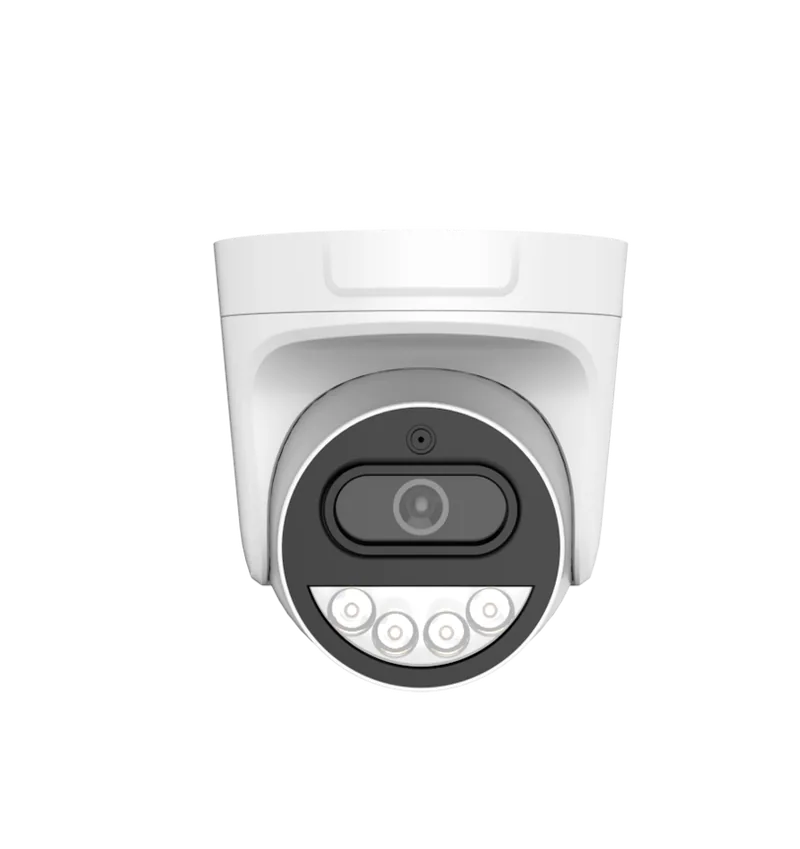
Vandal-proof, vandal-resistant and anti-vandal are used interchangeably in the trade, and all three describe mechanical resistance: the camera keeps working, keeps its aim and keeps its housing intact when somebody deliberately attacks it. In practice that means a small, rounded form with no projecting parts to grab, a lens that is recessed or covered, and a housing that can take an impact without cracking or deforming.
The positions that need it are predictable: lift cars, lift lobbies, entrance halls, car park decks and stairwells, service corridors, and any ground-floor camera facing a public street or a loading yard. These are places where the camera is within reach, where people pass when there is nobody to watch them, and where a camera that is knocked off aim is worse than no camera at all, because it produces a recording that looks like coverage until the incident review.
Our vandal-resistant options are built on the same module as the rest of the range — 5.0 MP at 2880 × 1620, 1/2.7-inch low-light CMOS at F1.0, colour to 0.1 Lux, H.265+ at 25 fps — with the protection provided by the form and the housing rather than by the electronics. A camera does not become vandal-resistant because of its sensor; it becomes vandal-resistant because of what surrounds it.
What does explosion-proof actually mean?
Explosion-proof equipment is designed for hazardous areas: spaces where a flammable gas, vapour or dust may be present in the air in quantities that can ignite. The engineering requirement is not “strong”. It is that the equipment cannot become an ignition source — either by containing an internal explosion so it cannot propagate into the surrounding atmosphere, or by keeping surface temperatures below the ignition temperature of the atmosphere present, or by separating the electrical parts from the atmosphere entirely.
That is a certified, type-tested category. Products are tested and marked for the specific zone, gas group or dust group and temperature class they are approved for, and the certification covers the installation as much as the device: cable entries, glands, barriers and inspection intervals are part of the approval, not optional extras. In many jurisdictions the regulatory framework for this equipment is the ATEX regime or an equivalent national scheme, and the marking on the product is what an inspector will ask for.
We do not supply explosion-proof cameras or housings. If your position is a hazardous area, the correct supplier is one whose products carry the appropriate certification for that zone, and any camera inside the hazardous area must be part of that certified system.
Why does the confusion cost money?
- Over-specifying. A tender that asks for an explosion-proof camera in a lift car pays for certified hazardous-area hardware where the actual risk is being kicked. The budget goes on paperwork and certification for a risk that does not exist at that position.
- Under-specifying. A tender that writes explosion-proof when it means tamper-resistant and impact-resistant receives a normal camera in a normal housing, because no mainstream CCTV supplier will quote certified hazardous-area equipment on those words. The gap is usually discovered at commissioning or, worse, at the first incident review.
- The safety case. A vandal-resistant camera installed in a genuine hazardous area is not a compromise; it is a potential ignition source in a space where that is the one thing that must not happen. That is the direction of the error that matters most.
Which word applies where?
| Term | What it addresses | Typical positions | What we supply |
|---|---|---|---|
| Vandal-proof / vandal-resistant / anti-vandal | Deliberate physical impact, attempts to push the camera off aim, attacks on the housing | Lift cars, lobbies, entrance halls, stairwells, car park decks, ground-floor street-facing positions | Yes — vandal-resistant forms and housings on the same 5 MP platform |
| Explosion-proof (hazardous area) | Preventing the equipment from igniting a flammable gas, vapour or dust atmosphere | Refineries, fuel storage, paint and solvent areas, flour and grain handling, some chemical and waste processes | No — this category requires certification we do not hold for these products |
| Weatherproof / IP-rated | Dust and water ingress only | Outdoor positions, wash-down areas, dusty plant rooms | The 38 × 38 mm modules carry no IP rating; protection comes from the housing |
Why are impact and IP ratings not the same thing?
One more source of confusion is worth clearing up, because it produces specifications that look thorough and mean nothing. Ingress protection is defined by IEC 60529, and it describes how well an enclosure keeps dust and water out. It says nothing at all about impact. A housing can be highly rated against water and still be destroyed by a single well-aimed kick, and a camera with no IP rating can be genuinely vandal-resistant if its enclosure is built for it.
So the two requirements have to be stated separately, and neither one implies the other. If a position needs both, write both, and write them as performance requirements — “at the lift car, the camera must keep its aim after impact from a person standing in the car” — rather than as a label that a supplier can interpret.
What should the specification say?
- Use the right word. If the concern is somebody hitting, breaking or re-aiming the camera, the correct term is vandal-proof, vandal-resistant or anti-vandal. Explosion-proof is a different requirement entirely.
- Name the position and the exposure. “Lift car, reachable” and “lobby ceiling, reachable from a chair” describe two different risks and may need two different housings.
- State what must survive. Keeping the recording running, keeping the aim, and keeping the housing intact are three different requirements; say which ones matter at that position.
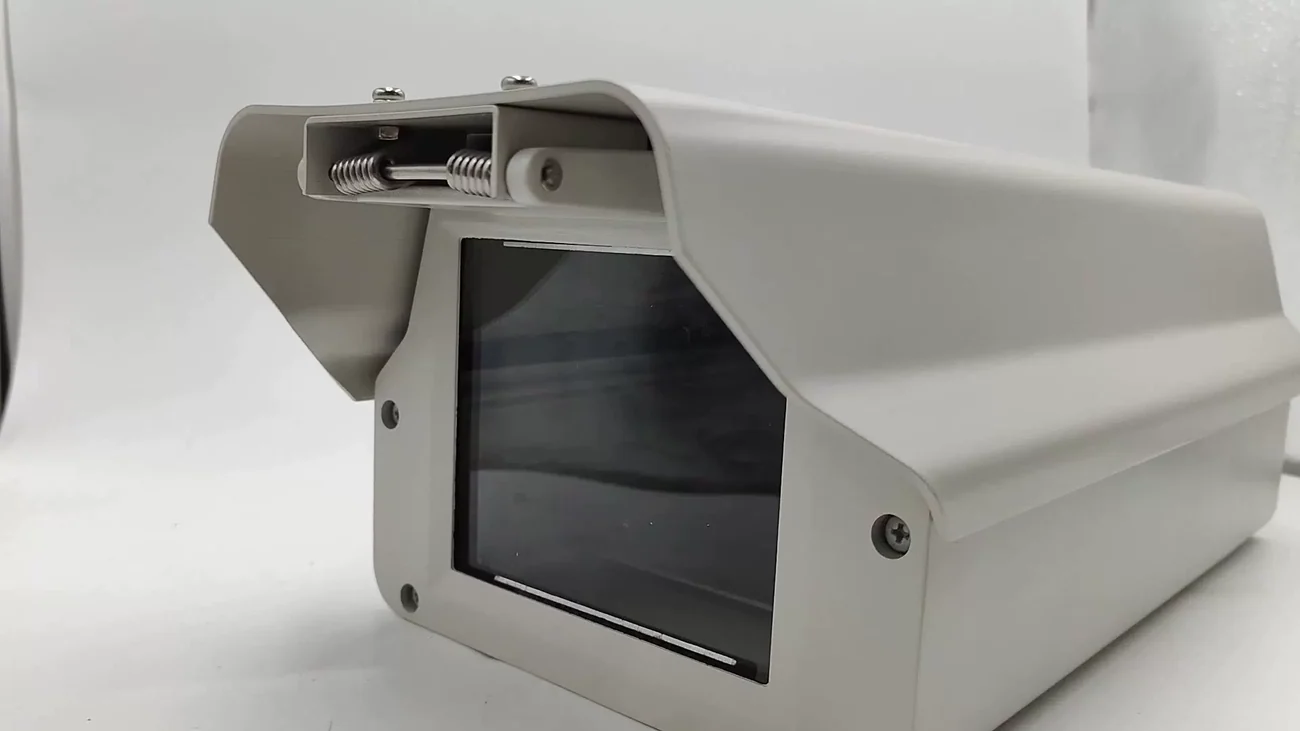
- Say who supplies the housing. The camera module and the housing are separate items in a bill of materials, and a quote that includes one but not the other is not a complete price for a vandal-resistant position.
- State environmental requirements separately from impact requirements, and do not accept an IP number as an answer about impact — or the reverse.
- If the area is genuinely hazardous, say so on the enquiry. We will tell you immediately that it is not a product we supply, and you can go to a certified supplier without losing a month.
Where do our vandal-resistant options fit?
For lift cars, entrances, lobbies, stairwells, car park decks and street-facing ground-floor positions, a vandal-resistant dome on our 5 MP platform covers the requirement on the imaging side: 2880 × 1620 at 5 MP, colour down to 0.1 Lux at F1.0 for positions with some light, monochrome at 0 Lux with the illuminator elsewhere, H.265+ recording at 25 fps, one audio input and one output with support for an 8 Ω 2 W speaker, and an operating range of -20 °C to +55 °C. The red and blue warning light interface gives a switchable deterrent at positions where somebody is likely to test the camera, and the light board is driven by two PWM channels at 24 kHz so the warning does not flicker on the recording.
Send us the tender wording and the position, and we will tell you which of the two requirements you actually have. If it is impact resistance, we will quote a vandal-resistant form with the housing included. If it is a hazardous area, we will say no and point you at the certification you need instead — which is a faster answer than a quotation you cannot use.