Cameras · Elevator
Elevator Cameras — Cable Routing and Vandal Risk
A flush 5 MP dome module in a lift car, mounted in the corner opposite the doors. The camera is the easy part — the travelling cable, the vibration and the fact that every passenger can reach it are what decide whether it lasts.
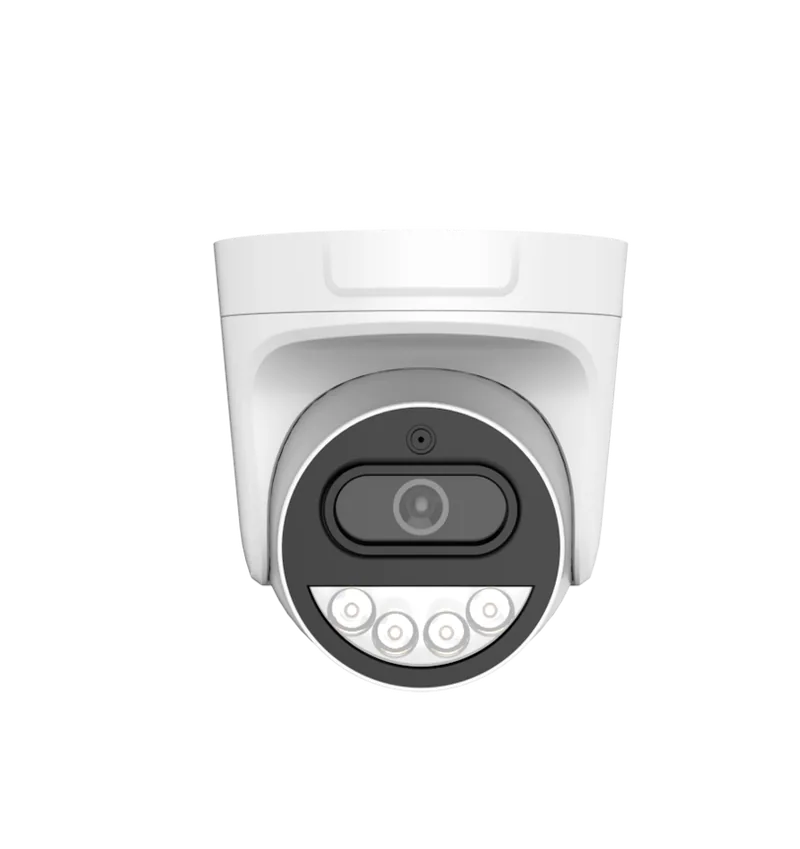
- Flush dome in the door-opposite corner
- Vandal-resistant by definition of position
- One CAT6 pair through the travelling cable
- Same 5 MP low-light module
Mounting position decides the value of the footage
Mount the camera in the corner opposite the doors, high enough that a raised arm cannot reach it and low enough that it captures faces rather than scalps. From that corner, one camera sees the doors, the button panel and the whole car, which covers both the identification case and the incident case.
A camera above the doors looking down gives you a row of heads and nothing else. It is the most common lift camera mistake and it is only discovered when somebody actually needs the footage.
Getting the cable into a moving car
The camera needs power and data, and the car moves. The connection runs through the travelling cable — the same bundle that carries the car's own control and lighting circuits — which means the work is coordinated with the lift contractor, not done independently.
Plan the port on the building switch in advance. With PoE over the travelling cable you carry power and data together and avoid running a separate mains feed into the car, which is usually the harder permission to obtain. Where the existing travelling cable has no spare pairs, the lift contractor may need to add them, and that is a scheduled activity rather than a same-day job.
Vibration, doors and the environment
- Use a mount that does not rely on a single screw into the car ceiling panel — a lift car ceiling is a cosmetic panel, not a structural surface.
- Expect motion alerts during travel and when the doors operate. Narrow the detection zone to the door threshold, or the recorder will fill with events.
- The car is an enclosed metal box, so check wireless coverage is irrelevant and PoE is genuinely the simpler choice.
- Doors closing on a protruding camera is a real failure mode. A flush dome avoids it entirely.
Recording and retention for lift footage
Lift footage is usually wanted for a specific incident, so retention matters more than frame rate. At 5 MP with H.265+ a lift channel costs roughly the same as any other channel in the storage calculation, so a 20-floor building with one camera per lift adds four to eight channels to the recorder — a straightforward addition if it is planned at the sizing stage and an expensive one if it is retrofitted after the switch and recorder are already fully loaded.
Decide the retention period before you size the drives. Thirty days is a common requirement and it roughly doubles the storage of a fifteen-day policy.
Frequently asked questions
Camera in the car, or in the lift lobby?
They answer different questions. The car camera shows what happened to a passenger; the lobby camera shows who was waiting and which car they took. Most buildings need the lobby position first, because that camera can also cover the entrance and the corridor.
What is different about cabling a lift car?
The car moves, so the cable has to travel with it, in a loop that is supported and rated for continuous flexing. That loop is usually the part of the installation that fails first, so it is worth specifying properly rather than treating it as an afterthought.
Can a standard dome go inside the car?
Physically yes, but check the lighting and the ceiling height first. A car is small and often reflective, and a wide-angle lens close to the mirror will show more of the reflection than of the passenger. Test the position before committing to it.
What should the specification say?
The mounting position, the field of view needed to cover the door and the panel, the travelling cable and its support, and who is responsible for the lift interface. Do not put a camera where it obstructs the door beam or the inspection panel.
Plan Your CCTV or Video Wall Project
Send us the building type, floor count and camera estimate — we will come back with a system layout, a bill of materials and a price.