When a building client asks what a surveillance system costs, the useful first answer is that the number is the sum of five lines — cameras, PoE switching, cable and accessories, recorder and drives, and the display layer — and that of those five, the line that moves fastest when the specification changes is storage. A retention promise made in a meeting becomes terabytes in a chassis, and terabytes have a fixed cost. That is why the arithmetic is worth doing in public, before anybody quotes.
What is the one formula that sizes storage?
Storage planning reduces to a single line of arithmetic: gigabytes per channel per day, multiplied by the channel count, multiplied by the retention days, divided by 1024 to convert to terabytes. Everything else — codec, resolution, frame rate, how much motion crosses the frame — only changes the first term.
On the 5 MP cameras we build, recording H.265+ at 25 fps real time, a channel produces roughly 8 to 15 GB per day. The spread is not marketing tolerance: it is scene-dependent. A corridor at night where nothing moves compresses almost to nothing; a loading bay with forklifts crossing the frame all day, and an illuminator working after dark, sits at the top of the range. The same camera model, the same resolution, twice the storage — the only variable is what the lens is looking at.
What do 30, 60 and 90 days of retention actually hold?
Run that range through the formula and the retention question turns into a table. The figures below are that arithmetic applied — the same daily gigabytes, multiplied by the days and the channels, and the result is what has to be in the chassis.
| Channels at 5 MP | 30 days | 60 days | 90 days |
|---|---|---|---|
| 16 channels | 4–7 TB | 8–14 TB | 12–21 TB |
| 32 channels | 8–14 TB | 16–28 TB | 24–41 TB |
| 64 channels | 15–29 TB | 30–58 TB | 45–86 TB |
Read the table with one question in mind: how many days of recording does anybody actually need, and on which channels. For most commercial buildings the honest answer is that the gate, the tills, the loading dock and the pharmacy store settle claims and want 60 to 90 days, while corridors and perimeter walks are reviewed within the week and can live with 30. Grouping retention across channel groups usually buys more useful coverage than spreading the same days evenly — and it costs less than extending everything.
When does retention become a question of bays?
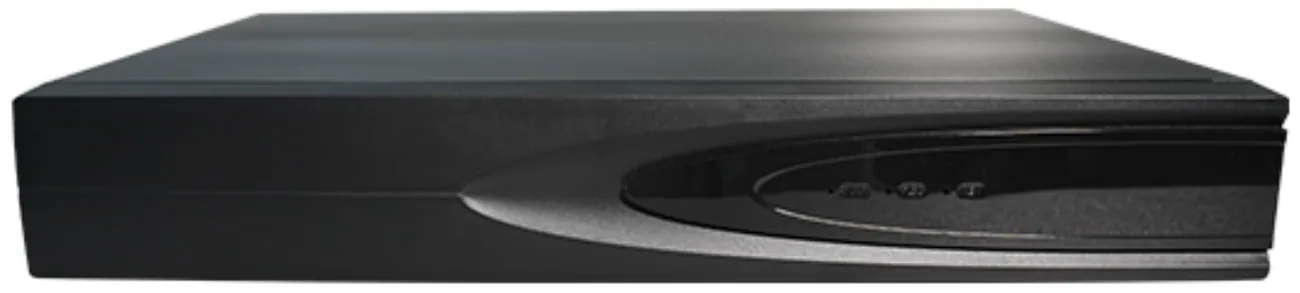
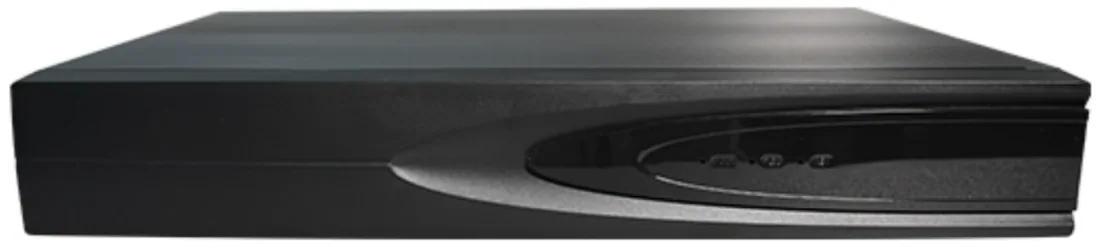
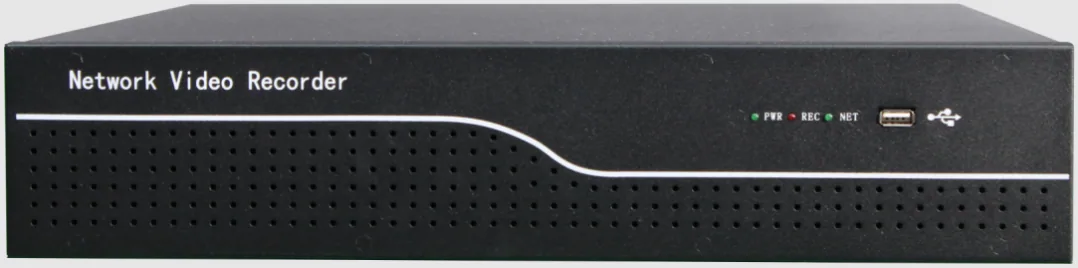
The arithmetic produces terabytes; the chassis has to accept them. Our recorders take one drive up to 14 TB on the 10- and 16-channel models, and up to 18 TB per drive across two, four and eight bays on the 32-, 49- and 64-channel chassis — 36, 72 and 144 TB raw respectively. That ceiling is where a retention decision turns into a hardware decision: 16 channels at 30 days fit comfortably on a single 14 TB drive, while 64 channels at 30 days need the multi-bay chassis before the days start to stretch. Compression and sub-stream recording stretch the days; only bays add capacity.
How do you cut the storage line without cutting the evidence?
- Record the sub-stream where detail is not needed. It multiplies retention at the cost of the resolution you review at — a fair trade for corridors, a bad one for a till.
- Tier the resolution by position. Recording 5 MP everywhere is a choice, not a requirement. Moving the low-consequence channels to 3 MP or 2 MP reduces the daily gigabytes immediately and keeps 5 MP where an identification could matter.
- Group retention instead of extending everything. Thirty days on the long tail, ninety on the channels that settle disputes.
- Record on motion or schedule where the scene is empty at night. An empty car park at 03:00 is storage spent on nothing.
- Stay on H.265+ rather than older compression. The codec is the cheapest capacity upgrade available, because it costs nothing but the setting.
Where does storage sit in the bill of materials?
It helps to know how the five lines divide before arguing about any one of them. On a typical building bill of materials the cameras and their mounts take the largest share at roughly 45 to 55 per cent, PoE switching 12 to 18 per cent, CAT6 and accessories 7 to 11, the recorder and drives 15 to 22, and the display layer 4 to 10. Those are indicative shares for planning a budget, not a quotation: inside the recorder line, the drives are the part that scales directly with the retention target, which is why a retention decision taken casually in a meeting shows up on the invoice.
What goes in the request so quotes are comparable?
- The channel count, and the resolution tier for each group of channels rather than one figure for the whole site.
- The retention days, stated per channel group if they differ.
- Whether sub-stream recording is acceptable on any of those groups.
- Whether the drives are included in the quote, and at what per-drive capacity.
- Whether the recorder is specified by channels and bays, or only by name — the second is how two quotes end up describing different machines.
Send those five answers and the storage line stops being an estimate. We will return the channel count with headroom, the recorder model, the bays and the terabytes, and the arithmetic written out beside them, so the number can be checked rather than trusted.