The comparison between colour night vision and infrared is usually presented as a contest, and it is not one. They answer two different questions. Infrared answers “is there something there”, and it answers it in complete darkness with no ambient light to work with. Colour answers “what exactly was there”, and it does so without switching the scene into monochrome. A well-designed building normally contains both, and the skill is deciding which positions get which.
Three things decide it at each camera position: how much light the position has after dark, whether the camera is allowed to be visible, and what the recording will have to prove. Get those three right and the technology question answers itself. Get them wrong and you either pay for colour you cannot use, or you end up with a monochrome file that nobody can identify anyone from.
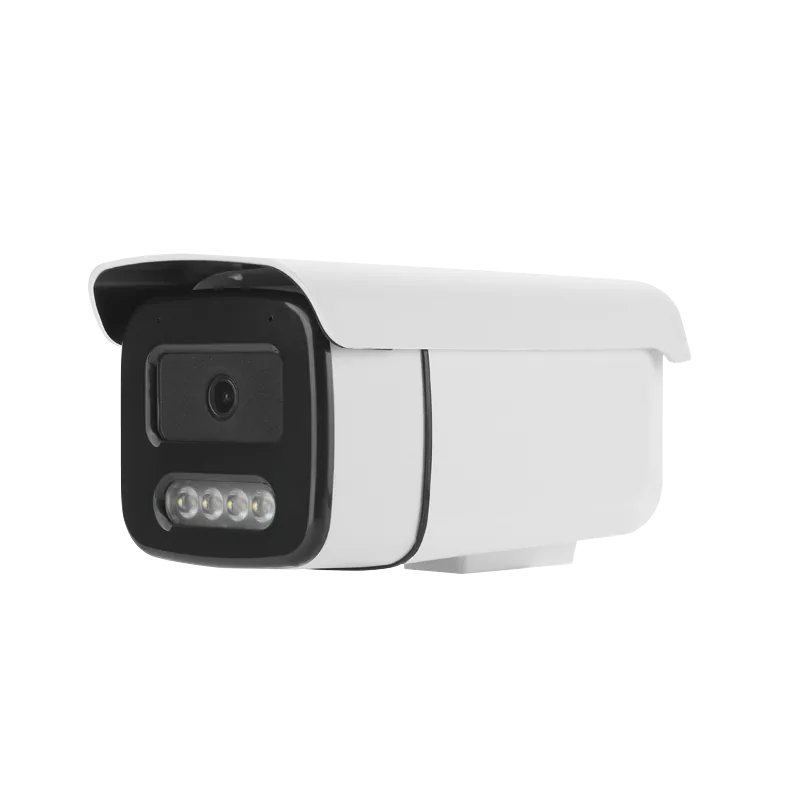
Our cameras publish the numbers needed to have this conversation without marketing language: 5.0 MP at 2880 × 1620 on a 1/2.7-inch low-light CMOS sensor, an F1.0 aperture, colour held to 0.1 Lux, and black-and-white at 0 Lux with the IR-cut filter out and the illuminator on. Everything below is built on those figures.
What changes the moment the lights go out?
A camera does not decide to record in colour or in monochrome for stylistic reasons. It depends on how much light reaches the sensor and on whether the IR-cut filter is in the light path. In daylight the filter blocks infrared so the sensor sees roughly what the eye sees, and the colour filters over each pixel site separate red, green and blue. At night the camera monitors the light level, and when it falls below the threshold it is configured for, it moves the filter out of the path and switches on the illuminator.
Our threshold is stated plainly: colour is held to 0.1 Lux at F1.0. Below that the integrated ICR driver removes the IR-cut filter, the sensor and the illuminator work together, and the output becomes black and white at 0 Lux. That is the whole mechanism — a switched filter and a light source, with the switch point set by illumination and by how the camera is configured.
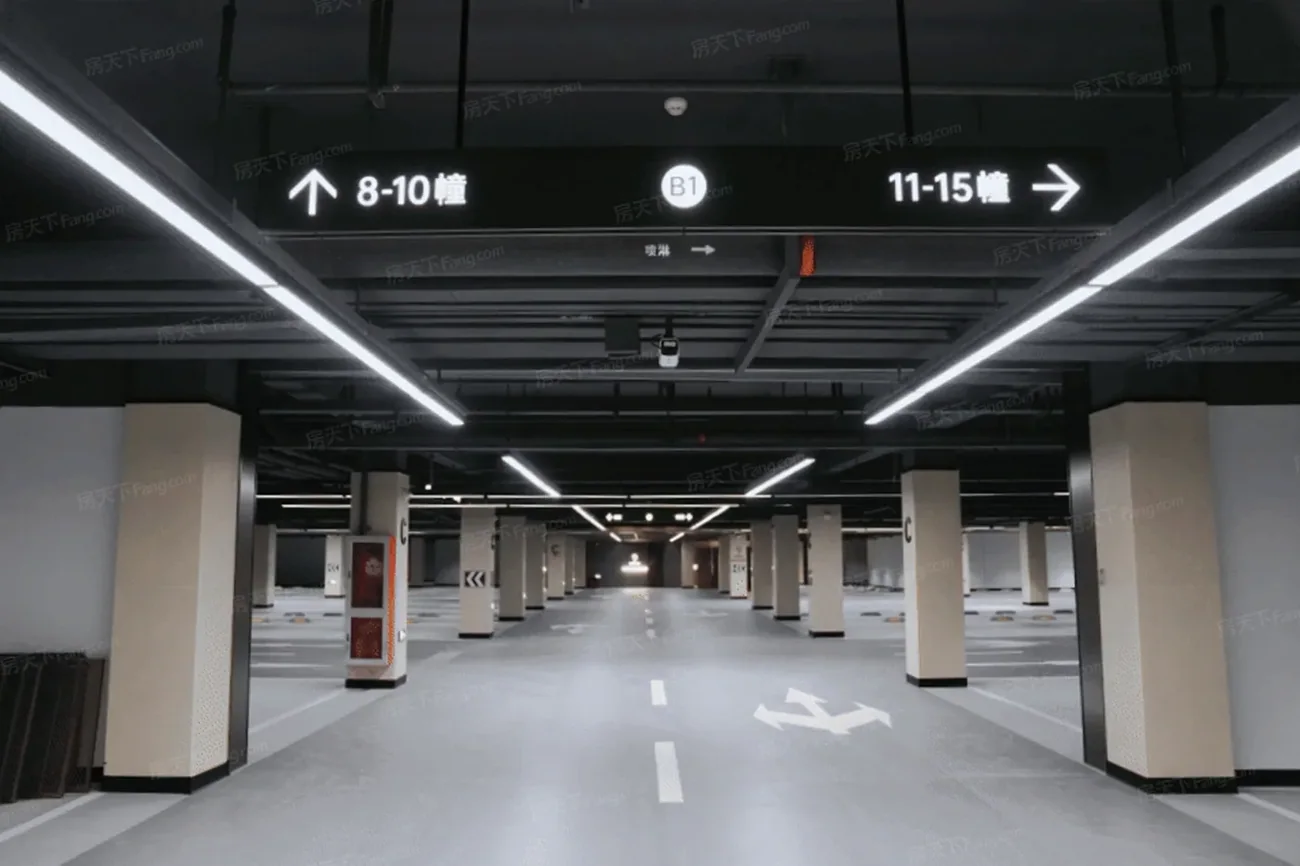
What this means in practice is that a lit car park, a corridor with a night light, a street-facing forecourt or a loading bay with a security lamp is a colour position. An unlit boundary, a rear service lane or a field edge is an infrared position, and no amount of specification writing changes that.
What two costs of infrared never appear on a datasheet?
Infrared carries two costs, and only one of them is on any specification sheet. The listed cost is the monochrome file: the sensor records brightness faithfully and colour hardly at all, because the pixel colour filters pass very little infrared. There is no processing step that puts colour back, because it was never captured. A witness can describe a dark jacket and the file will never disagree — but it will never help either.
The unlisted cost is that an infrared illuminator is a lamp. It is close to invisible at short range to the eye, but to somebody standing in a yard and looking for the camera it is a fixed glow in the dark, and it tells them exactly where the coverage stops. On a deterrence-driven site that is a feature. On a site where you would rather not advertise the coverage, it is a weakness that does not appear in any brochure.
Colour night vision inverts both. There is no illuminator running while ambient light is sufficient, so there is nothing to see. Visible deterrence becomes a deliberate choice instead: our cameras expose a red and blue warning light interface, and the light board is driven by two PWM channels at 24 kHz, which keeps it flicker-free on camera rather than a strobing artefact in the recording.
Which numbers actually decide it?
Four specification rows matter, and a quote that omits any of them cannot be evaluated on night performance at all.
| Specification | Colour mode | Infrared mode | Why it decides the outcome |
|---|---|---|---|
| Minimum illumination | 0.1 Lux at F1.0 | 0 Lux with the illuminator on | Sets the light level at which the camera stops recording colour; a datasheet that lists only one figure is hiding one of the two |
| Aperture | F1.0 | F1.0 | The lower the f-number, the more light reaches the sensor; this is the number that makes a low-light claim credible |
| Sensor format | 1/2.7-inch low-light CMOS | Same sensor | Sensor area behind each pixel decides how clean the image is when the light is marginal, and it is the same in both modes |
| Frame rate | 25 fps real time, 7–25 fps adjustable | 25 fps real time | A stream that quietly drops frame rate at night changes what fast movement looks like, in either mode |
Where does each approach belong?
Infrared is the right specification in several common positions, and we are not going to pretend otherwise:
- Unlit boundaries and long lines. Where distance is measured in tens of metres and the objective is detecting movement along a line rather than identifying a person, an illuminator plus a longer lens covers far more ground per device than any fixed colour camera.
- Sites with no lighting plan. If there is no ambient light and no prospect of any being installed, an illuminator is the only thing that produces an image at all.
- Deterrence-driven positions. Where a visible, obviously active camera is part of the point, the glow is doing useful work.
- Storage-constrained sites. A monochrome stream carries no chroma, so at the same resolution it consumes less bitrate — relevant when the retention period is fixed and the drive budget is not.
- Positions where white light would cause complaints from neighbours or from staff working at night, though this cuts both ways because the illuminator itself is still visible.
Colour is the right specification where identification matters: entrances, reception, lift lobbies, car park decks, loading bays, cash-handling areas and any position where an incident becomes a statement, an insurance claim or a court case. These are the positions worth spending the colour budget on, and they are usually a minority of the camera count — which is why a mixed design is normal rather than a compromise.
Can you mix both on one recorder?
There is no technical penalty for mixing the two approaches. Both are IP cameras on the same network, both register on the same recorder over ONVIF, RTSP or GB28181, and both record in H.265+ at up to 25 fps. The recorder does not know or care which illumination method a camera uses.
What you should keep consistent is the configuration layer, because that is where a mixed system quietly goes wrong. Use the same resolution ladder across the site — 5 MP at 2880 × 1620 as the default, with 4 MP, 3 MP or 2 MP for positions that do not need it — and the same compression and frame-rate settings. Otherwise one channel can consume several times the storage of another, and the retention calculation you signed off no longer describes the system you own.
What does infrared do to the storage arithmetic?
Camera bitrate, not camera price, is what fills a hard drive. Our main stream runs at 500–8000 kbps and the sub stream at 50–2000 kbps, both H.265+. Converting that into storage is a one-line sum:
GB per day per channel × channels × retention days ÷ 1024 = terabytes required
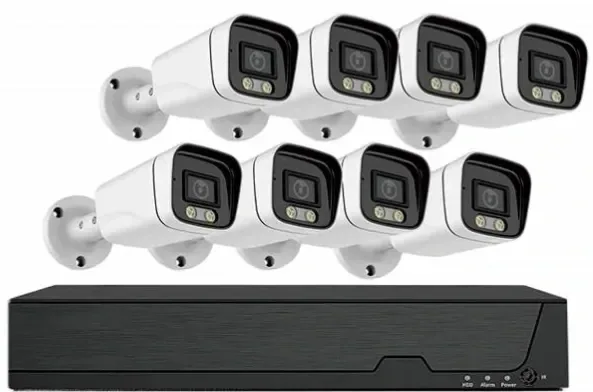
A 5 MP channel typically lands between 8 and 15 GB per day at H.265+, so a 40-channel building keeping 30 days needs somewhere between 9.4 TB and 17.6 TB of usable space. That is the difference between a two-bay recorder with 14 TB drives and a four-bay unit, and it is decided by the night mode as much as by the camera count, because a monochrome channel at lower bitrate buys back retention you would otherwise have to purchase in drive bays.
What should the specification say?
If night performance matters, put it in the specification as numbers rather than adjectives, and require them in colour mode: minimum illumination, aperture and sensor format. Then add two sentences that protect the project: that the quoted camera must hold colour in the lighting conditions at the named positions, and that sample footage from a comparable scene will be provided before delivery. A specification written that way cannot be answered with a vague sensitivity claim, and it gives you a documented basis for a conversation if the delivered system behaves differently from the brochure.
Send us your site plan and the positions you are unsure about. We will mark which ones suit colour, which suit infrared, and what each choice does to the storage budget. Sample footage is available on request, including night recordings from positions with lighting similar to yours.